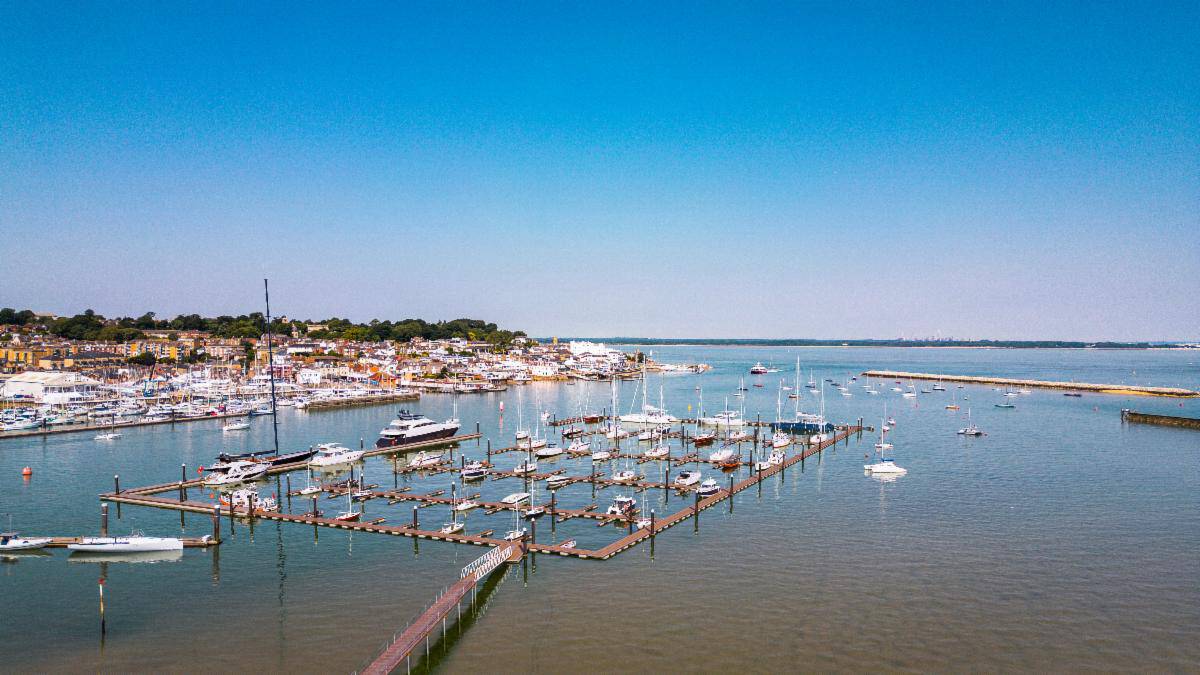
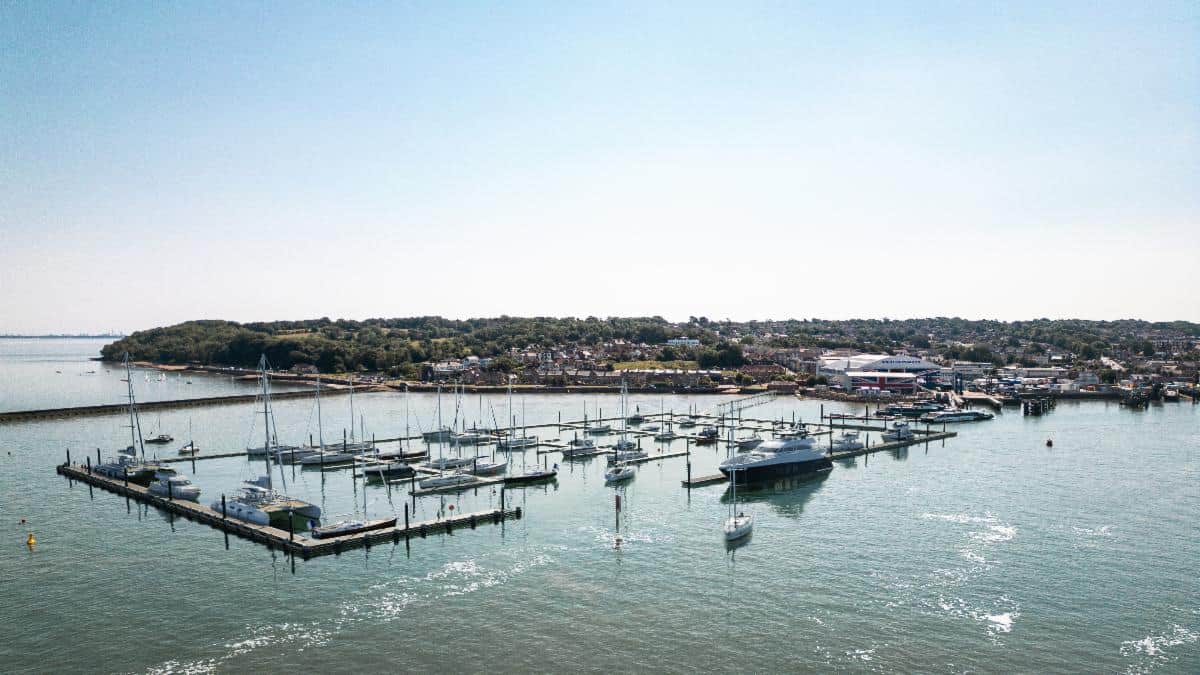
Cowes Harbour Commission (CHC) is proud to introduce Cowes Harbour Marina, a brand-new, state-of-the-art marina development set to transform East Cowes and enhance Cowes’ reputation as a premier sailing destination.
A Marina Designed for the Future
As part of our ‘fit for the future’ strategic vision, CHC is developing a 145-berth, walk-ashore marina, designed to cater to a wide range of vessels, from leisure boats to large racing yachts and superyachts. With a minimum berth length of 7m, the marina will provide much-needed berthing capacity and offer modern facilities tailored to the needs of recreational sailors and luxury yacht enthusiasts alike.
Supporting the Local Economy & Maritime Industry
The new marina is a key component of the wider East Cowes regeneration plan, bringing economic growth and new opportunities to local businesses. An independent Economic Impact Report by Co-Create projects that the marina will generate an estimated £23 million in economic benefits over 20 years, supporting marine services, local restaurants, retail and accommodation providers.
Project Update 17.06.26
PROJECT OVERVIEW
Delivering a Safe, Sustainable and Economically Beneficial Marina for East Cowes
Cowes Harbour Commission (CHC) is progressing plans to deliver a new marina in East Cowes that will provide modern, high-quality berthing facilities while supporting economic growth, enhancing harbour infrastructure, and contributing to the long-term prosperity of the local community.
The project has been developed following extensive consultation, detailed technical studies, and engagement with regulators, stakeholders and local organisations. Throughout the design process, our priority has been to ensure that the marina meets recognised international marina design standards, operates safely in all conditions, protects the natural environment, and integrates sensitively with the East Cowes waterfront.
Why is a New Marina Needed?
Research undertaken by CHC, together with feedback from harbour users, local stakeholders and visitors, identified a demand for additional mooring capacity within Cowes Harbour. In particular, there is increasing demand from owners of larger yachts and visiting vessels seeking modern walk-ashore berthing facilities.
The proposed marina will provide 145 berths, with approximately half allocated to annual berth holders and half reserved for visiting vessels. This balanced approach will support local boat owners while also attracting visitors to the area.
Independent economic analysis indicates that the marina will generate approximately £23 million of economic benefit for the local economy through increased visitor spending, employment opportunities, and support for local businesses.
Economic Benefits
The marina will provide a range of benefits for East Cowes and the wider Isle of Wight, including:
- Approximately £23 million of economic benefit to the local area, over a 20-year period.
Modern marina facilities capable of supporting annual mooring holders, visiting yachts and international sailing events.
Increased demand for local marine services, engineering businesses and marine trades.
Greater visitor spending across East Cowes and Cowes, benefiting restaurants, retailers, tourism venues, transport providers and local businesses.
New opportunities for sustainable employment within the marine and tourism sectors.
Enhanced links between East Cowes and Cowes as a combined marina destination.
Support for wider community partnerships and waterfront initiatives.
A stronger business case for enhanced water taxi services, benefiting both residents and visitors.
While CHC is not proposing to operate a chandlery as part of the development, the marina is expected to create opportunities for third-party businesses to establish and grow marine-related services within East Cowes.
Strong Demand for the Marina
The level of interest in the marina continues to demonstrate the need for additional berthing facilities within Cowes Harbour.
Demand for berths remains strong, with expressions of interest already exceeding the number of berths available within the proposed marina.
By combining careful planning, robust engineering, environmental management and protection, and extensive consultation, CHC is delivering a marina that will provide long-term benefits for harbour users, East Cowes and the wider Isle of Wight, while maintaining the highest standards of safety, accessibility and operational performance.
CONSULTATION AND ENGAGEMENT
Extensive consultation has been undertaken throughout the development of the project, both before and after submission of the planning application.
This engagement has included discussions with multiple departments of the Isle of Wight Council, East Cowes Town Council, local stakeholders, harbour users, Natural England, the Marine Management Organisation (MMO), and other regulatory bodies.
As the project has evolved, feedback received during consultation has directly influenced aspects of the design. In particular, the marina access walkway has undergone several design iterations following discussions with East Cowes Town Council and the Isle of Wight Council Planning Team, ensuring that the final proposal reflects both operational requirements and local aspirations for the waterfront as much as possible.
Dredging Works
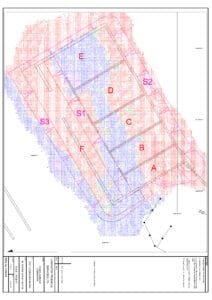
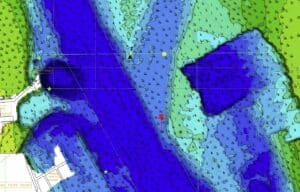
Dredging of the marina commenced following the granting of a Marine Licence by the MMO in October 2025.
The works are now nearing completion and will provide the water depths required to accommodate the range of vessels expected to use the marina safely and efficiently.
Navigational Safety
Safety has been a fundamental consideration throughout the design process.
The marina’s location has been carefully selected to avoid encroachment into the East Channel and to maintain safe navigation for all harbour users. The layout preserves a minimum clearance of 25 metres between the outer edge of the marina pontoons and the eastern edge of the main navigation channel, measured outside the red channel marks.
This represents an improvement on the historic arrangement of swinging moorings, which were located closer to the channel edge and could, under certain wind and tidal conditions, significantly reduce the available clear water outside the channel.
Detailed navigational assessments have confirmed that the marina will not impede the safe operation of commercial vessels, harbour traffic, Red Funnel ferries or vessels accessing Wight Shipyard.
Parking and Transport
A comprehensive Transport Statement formed part of the planning application process.
Following additional parking surveys requested by Island Roads, concerns regarding parking provision have been addressed, and the previous objection has been withdrawn.
Integrating with the East Cowes Waterfront
Significant thought has been given to the design of the marina access walkway to ensure it complements the recently completed public realm improvements along the East Cowes Esplanade.
The walkway and access ramp have been positioned as far south as practicable to minimise their visual impact, preserve views across the Solent, and avoid affecting public access to Bells Landing.
The design also complies with the requirements of the Equality Act 2010, ensuring that the marina is accessible to all users. The ramp will run parallel to the sea wall while maintaining a gap of almost two metres from the adjacent Southern Water building, allowing continued use of the existing pedestrian route.
The overall design seeks to balance operational requirements, accessibility, visual appearance and public enjoyment of the waterfront.
Bringing the Guard House Back into Active Use
The proposed marina development will also secure the long-term future of the historic Guard House building.
Although the building recently benefited from external refurbishment works funded through Government investment, its internal condition remains poor, and there were no identified plans for its future use.
CHC’s proposals will bring the building back into active use as modern toilet and shower facilities for marina users, ensuring that the building is maintained and protected for future generations.
The proposed extension has been deliberately designed to remain subservient to the original structure and provide the facilities required to support marina operations. At the request of the Isle of Wight Council, the extension has been designed to be clearly distinguishable from the historic building, ensuring that the heritage significance of the original structure is preserved.
The proposed railings surrounding the site have been designed to complement the existing railings around the Guard House and Old Barracks buildings while also meeting safeguarding requirements requested by UKSA.
ENVIRONMENTAL CONSIDERATIONS
The marina is located within the internationally important Solent Special Area of Conservation and Solent and Southampton Water Special Protection Area. The Isle of Wight is also part of the UNESCO Biosphere Reserve.
As a result, environmental protection has been a key consideration throughout the planning, design and construction process. Detailed assessments have informed the approach to dredging, piling, pontoon design and construction methodologies to ensure that impacts on the marine environment are minimised.
Extensive hydrodynamic and wave modelling has been undertaken to understand the conditions experienced within the harbour. This work has been supported by data collected from state-of-the-art monitoring equipment installed within the harbour, together with research into comparable marina developments elsewhere in the world.
The findings confirmed the need for substantial six-metre-wide wave attenuation pontoons at the northern end of the marina. These structures will reduce the impact of wave action, wind and tidal forces, helping to ensure safe and comfortable berthing conditions throughout the year.
Sustainable Marina Facilities
The marina will incorporate modern environmental facilities, including two wastewater pump-out stations that will be available for boat owners to use free of charge. Berth holders will be actively encouraged to make use of these facilities to support good environmental practice within the harbour.
Waste disposal facilities will be located adjacent to the marina toilet and shower building, helping to ensure the marina is managed efficiently and responsibly. The only trolleys permitted within the marina will be those owned and operated by berth holders.